This course features classroom and field sessions, during which you will learn and practice photographic concepts including:
- Scene previsualization, described by famed landscape photographer Ansel Adams as “the single most important factor in photography.“
- Digital capture, using proper exposure to record all of the shadow and highlight detail that is important to the scene and produces the best base image. This class will explore all aspects of exposure including histogram management, exposure adjustments, the use of camera filters, and filters applied in postproduction software.
- Postproduction techniques to convert images to black and white. Software can be overwhelming, but the class will learn of straightforward approaches that are easy to use.
- Ways to apply darkroom techniques through the use of software tools that can enhance images to their fullest potential.
Click here to register!


]]>
Although the total time was short, we felt that we were away and able to return home energized and inspired.

I am fortunate to work a block and a half from one of North America's premiere Japanese gardens - the Anderson Japanese Gardens in Rockford, Illinois. A quick after-work 90 minute trip with a colleague became another outing that a great deal can be found near where we live or in this case, work.
It's amazing what 90 minutes of Zen does for one's outlook...

]]>

Every now and then, nature does something that's inexplicable. In the case of the moving rocks at the Racetrack playa in Death Valley National Park, rocks at the southeastern section of the dried lake bed leave tracks, some stretching for a quarter mile. At first, this would seem to be made by humans because - of course - rocks don't move by themselves. But when standing on the rock-hard lake bed, the surface is almost impenetrable. So, how do the rocks make their tracks? Nobody knows...for sure. The most likely cause is a sequence of events that is something akin to the revealing of a magic trick.
First, the stones naturally tumble off the mountains that surround the lake bed. Although Death Valley is the driest spot in North America, the Racetrack does receive a small amount of rain in the winter months. The lake bed fills with a shallow layer of water which them freezes, trapping the rocks in a large, thin sheet of ice. As temperatures warm in early spring, winds are thought to move the ice sheets with the rocks still frozen in place. The rocks make contact with the now softened lake bed, creating scars or "tracks" in the lake bed. Once dry, the lake bed rehardens, capturing the scars for years to come. The effect is other worldly - sometimes making the rocks appear as though they are racing and sometimes crossing each other's paths.

Case in point…I had planned an autumn day in mid-October out photographing. But this was a year where the fall colors were 3 weeks late. Instead, I had time for a 90-minute outing at the Morton Arboretum in Lisle, Illinois. Driving in very long lines through the beautiful settings, I bolted from my vehicle to take what amounted to snapshots. I refused to miss the rich autumn colors that had made me miss my day out in the woods.
Ultimately, the experience was rewarding because I found numerous visually inspiring scenes in that short time and was reminded that how we see the world is more important than how much time we have to see it.

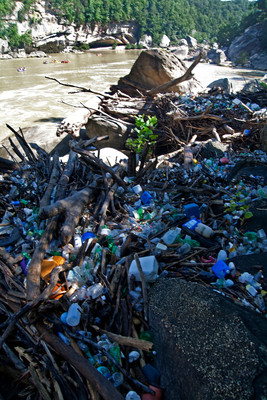 I rarely get on an environmental soapbox, but....
I just returned from a very short trip down to Lexington, Kentucky. It's been nearly 30 years since I had been to Cumberland Falls, the largest waterfall in the U.S. south of Niagara and east of the Rocky Mountains. The last time I visited, the landscape was nearly pristine.
Now, as you can see in the photo, the base of these beautiful falls is littered with thousands of plastic bottlers and other garbage. State funding cuts have made it impossible to keep the area free of waste, and it feels like a return to the 1970's when we trashed the beautiful places around us.
]]>While we expected an unfair fight, the elk proved to be a formidable fighter, and quite skilled at fending off the wolf’s attempted attacks. 20 minutes into their strategic positioning, both animals took a 20 second break, as if the first round bell had sounded. After a second round of back-and-forth, the wolf had had enough and left the river, retreating to the northwest. With its injured right leg, the elk pursued the wolf for a couple hundred yards – at which point, the wolf turned and chased the elk again back toward the river. Halfway into this new chase, the elk planted both front legs and kicked the wolf with both hind legs. Another round in the water … and a final retreat in opposite directions by both animals.
With the birthing season in full bloom, bear and wolf activity increases dramatically in the valley with the abundance of young and vulnerable prey.
To witness this interaction was a gift - and an experience we’ve not stopped talking about…


