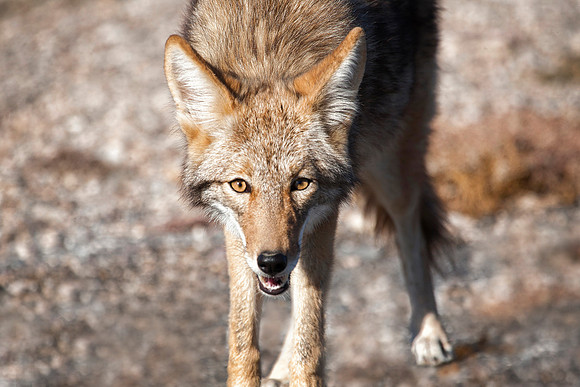
This photo begins the wildlife/animal group of my favorite photos.
When looking with friends and family at photos we've taken of wildlife, invariably someone has said, "you won't find me ever getting that close!" And I do understand that. But there are many things I do to stay safe.
1. I study deeply about each species and practice what I learn in the field. Predation on humans by wildlife is rare, but I respect that it does occur. Therefore, I do not approach wildlife - I can't say
never, but we'll get to that later. Realize that a close encounter with a moose (bull moose in rut or a cow moose with offspring) can be more dangerous than one with a bear.
2. I keep at the recommended distance from wildlife, especially published distances for the most dangerous animals (100 yards for grizzlies, 25 yards for wolves, etc). Animals with offspring - give them an incredibly wide berth.
3. I shoot with the longest lens that I have. I'd much rather crop in later than wake up in a recovery room.
4. I carry bear pepper spray and follow all best practices of engagement for each species. Mostly, it's just really good common sense. Essentially, if your actions cause an animal to alter its behavior, you are either too close or behaving in a manner that could be perceived as threatening. Use common sense and look for signs that an animal is becoming agitated.
Now, to this image: Sheryl and I were heading toward Titus Canyon in
Death Valley National Park for some 4WD off-road exploration. Along one of the desolate routes on the way, we passed this coyote trolling the side of the road, looking for bits of anything left from passing cars. We pulled about 75 yards ahead of the coyote and I got out to get some photos with a 560mm lens combination. I didn't plan on anything special, as coyotes are rather timid and in general do not approach people. The coyote worked his way toward us, more just that we were in the path of where it was heading. It became obvious, as it approached, that it was a beta member of the pack, head low and looking up. Also obvious that it had probably received occasional food from visitors. Though we were perched at our car doors, when it came within about 15 yards, we got in and left - hoping to keep from encouraging future human encounters.
5. Simply,
never feed wildlife. Never, ever, ever.
Canon EOS 5D, Canon 100-400mm f/4.5/5.6L IS @ 400mm with Canon 1.4X Teleconverter III - effective focal length - 560mm, 1/500 sec @f/8, ISO equiv 200,
Calumet 8000 Carbon Fiber Tripod, Gitzo G1276 Ballhead